Smart rings are supposed to disappear into your life. You wear them, forget about them, and let them track your health in the background while you go about your day. That’s mostly what the CUDIS Ring, an AI-powered ring by a company that has been around since 2023, has been like for me over the past three weeks.
The CUDIS 002 Sporty Ring, like many in the canon, is supposed to help you live better by giving it access to monitor your movements around the clock. It is a fitness tracker, a sleep tracker, and a digital virtual wellness assistant. The data it collects is saved on the blockchain, giving users more control over their data.
If you judge it purely as a piece of hardware, it’s actually hard to fault. The black finish that I got blends perfectly with my style, so much so that someone mistook it for a wedding band. It’s comfortable enough that after a while, you genuinely forget it’s there.
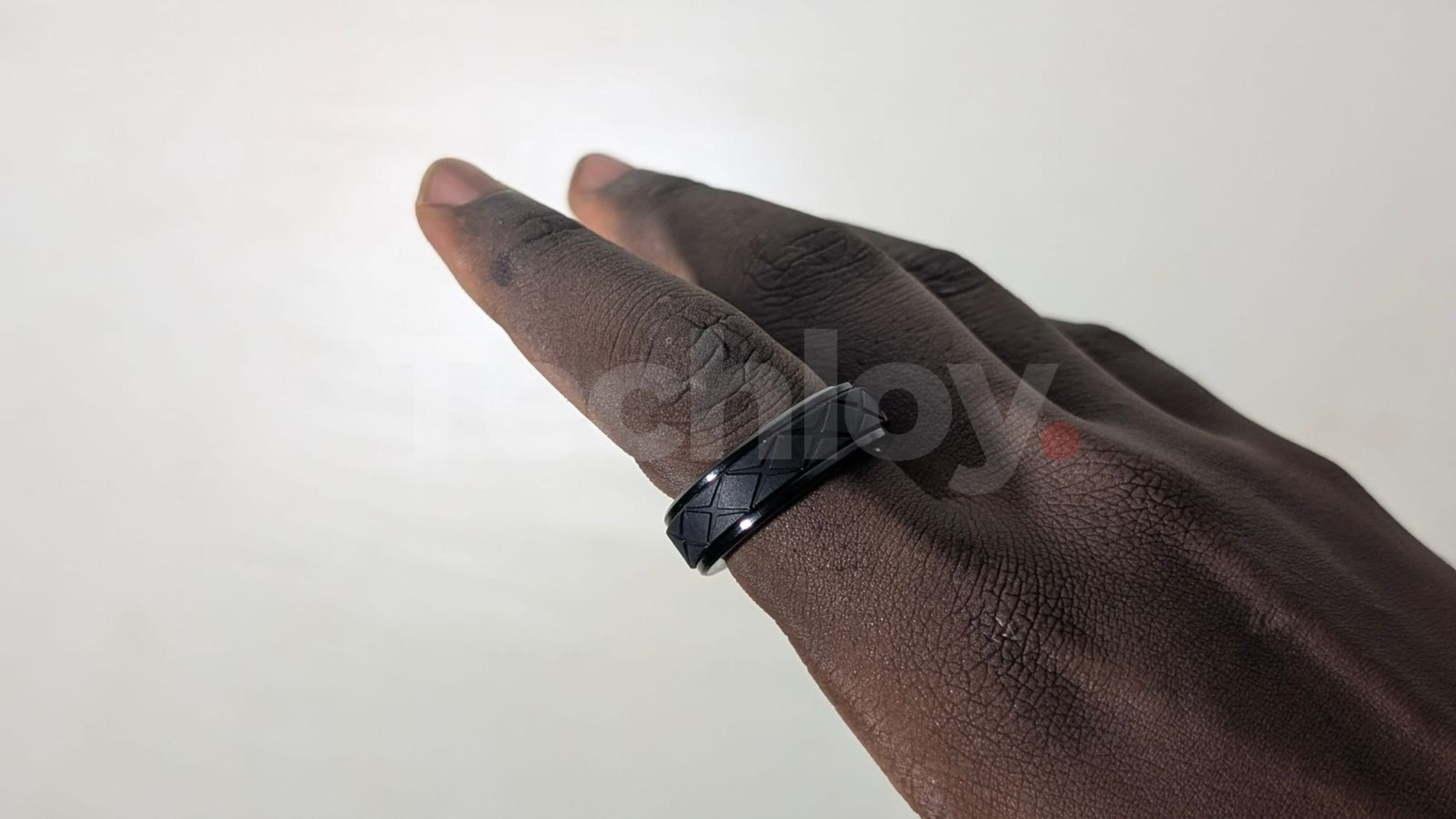
That sense of calm is kind of the theme of the ring itself. It’s lightweight, unobtrusive, and easy to live with, whether you’re sleeping, typing, walking around, or working out. You never really feel like you’re wearing tech, which is exactly what a wearable should achieve.
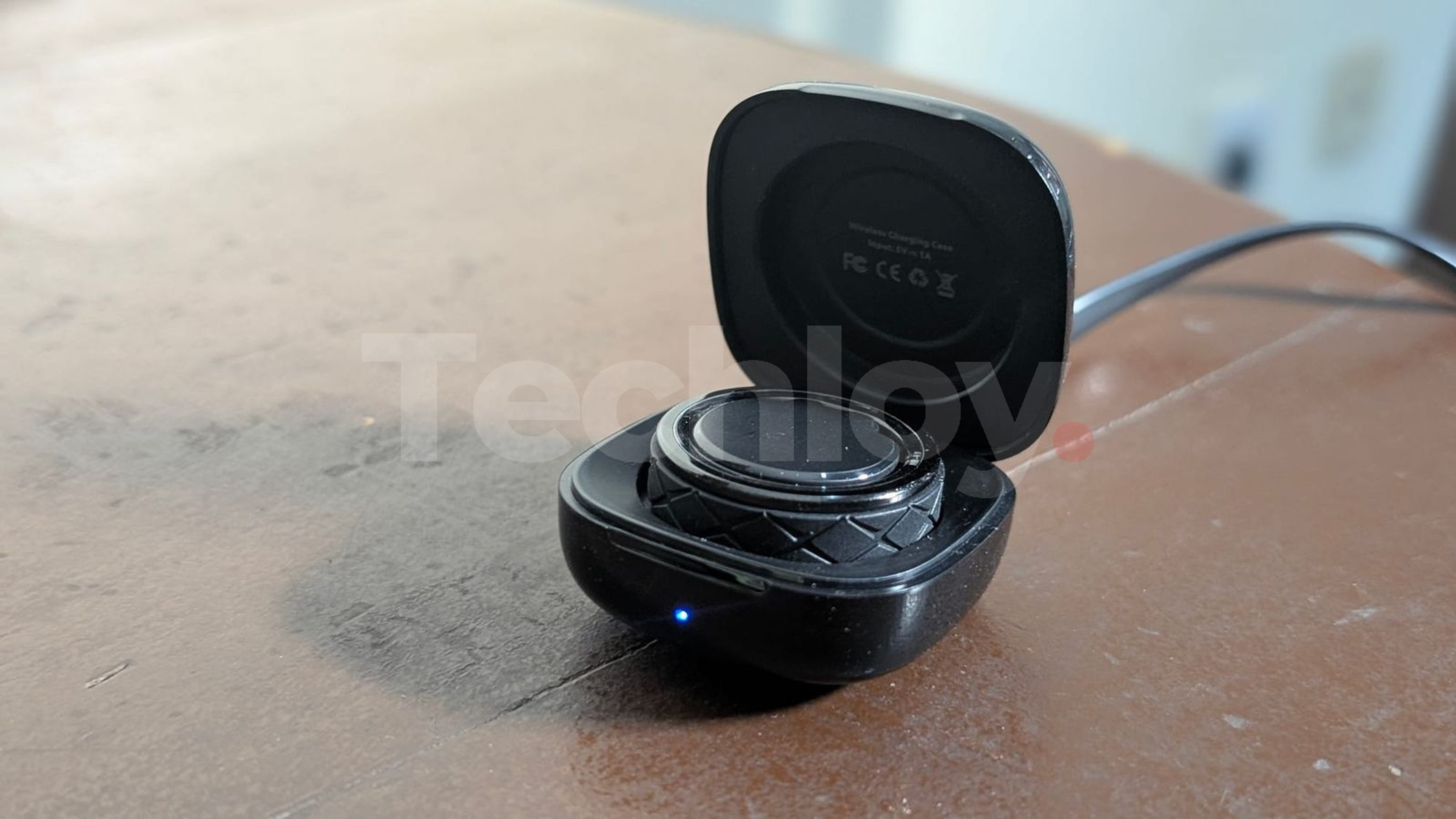
However, the ring breaks that calm when you charge it. It heats up — not dangerously hot, but warm enough to make you pause and wonder if you should be worried. Thankfully, you only have to charge it about once every two weeks, so it’s not something you deal with often. It’s just… noticeable.
But what interested me the most about using the CUDIS Ring isn’t the ring itself. But the app and how the two talk to each other.
Like pretty much most third-party phone accessories, the ring is ultimately a Bluetooth device. And like many Bluetooth devices, once you wander a bit too far from your phone, it disconnects. That wouldn’t normally be a problem. One would expect that. What you won’t expect is that when you come back within range, it just doesn’t reconnect without prompting it.
Every single time this happened, I had to open the app, try to reconnect, fail, unpair the ring, and then pair it again manually. Every time. It became part of the routine of using the CUDIS Ring, which is exactly the opposite of what a fitness tracker is supposed to be. These things are meant to run quietly in the background. This one regularly asks for your attention.
Video sped up for time. This took nearly 4 minutes.
That disconnect between the device and the app eventually alters the accuracy of the data. Though it comes with a tiny footnote in the app that reminds users that none of its recommendations is actual medical advice.
On my first day wearing the CUDIS Ring, I tried a simple test: I walked about 100 steps to see what the ring would report. At around 15 steps, the app still showed zero. Thinking I had set something up wrong, I sat down to go through the manual again, and while I was sitting still, the step count suddenly jumped to 39. The result of a Bluetooth lag? Or my own poor internet? It is hard to tell. Unlike other products that prompt users when they are out of range, the CUDIS Ring didn’t tell me.
Speaking of tracking, the ring supports, by my count, 54 different sports modes and allows users to actively track those activities while they're performing the activity. There are the usual ones, like tennis, running, and walking. But then there are a couple of head-scratchers that make you wonder how that's accounted for or why it gets its own category, like “yard work/gardening”, “play with child” and “bodybuilding”, which is apparently different from “weight lifting”, “power lifting”, and every other workout already listed.
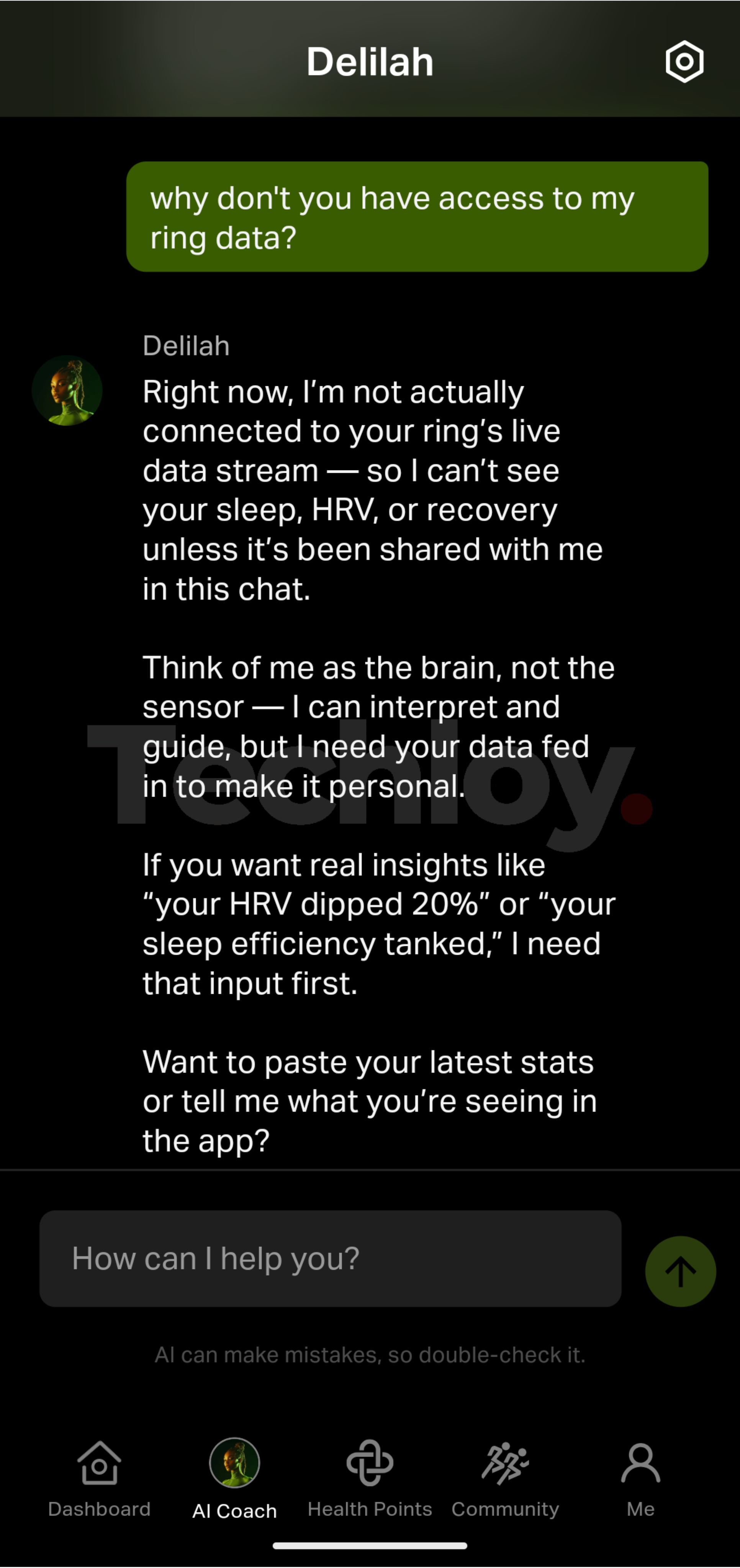
I tried talking with the AI coach that the app comes with, seeking health advice, but it just gave me vague advice, like “take 7-10k steps and sleep better." But why do I need to do this? It couldn’t fathom it.
Then I got a bit more personal with my questioning and asked it to give me recommendations based on my stats on the ring so far, and it couldn't. Because it doesn't have access to it. Even though it had asked for access, and I had allowed it previously. And honestly, I couldn't be bothered transferring my information from within the app back to the app.
But, despite all of this, the ring still managed to do something important. It made me want to move again. Wearing a tracker, seeing numbers (even imperfect ones), and knowing something is monitoring your activity has a way of nudging you into being more active. I started going back to the gym. I paid more attention to how much I moved during the day. I became more aware of my health habits. In that sense, the ring absolutely works, not because of anything uniquely CUDIS, but because this is what wearables do when you actually wear them consistently.
Which brings us to the bigger question: at $399, why this ring? There isn’t a standout feature here that you couldn’t get from other established, older, more familiar health-tracking brands like the Oura Ring, with more mature apps and more reliable syncing. Unless you’re particularly interested in CUDIS’ blockchain feature and the idea of data ownership and security that comes with it, it’s hard to justify the price purely on functionality.
After three weeks, the CUDIS Ring feels like good hardware wrapped in a frustrating, unfinished software experience. It’s comfortable, subtle, and easy to wear, but the unreliable connection, constant need to re-pair, and occasional data oddities make it feel like a product still in need of refinement.
 Damilare Odedina